Bluffing games are the ones where the rules are easy and everything else is hard. You’re not managing resources or drafting cards — you’re looking your friend dead in the eye and lying. Or watching someone convince the whole table they’re telling the truth when you know they absolutely aren’t.
What they ask of you is social intelligence: reading people, managing your own tells, deciding when to call someone out and when to let it slide. I’ve seen people who crush complicated strategy games fall completely apart in a round of Coup. And I’ve seen someone who’d never played a board game before walk into Skull and immediately become the most dangerous person at the table.
We’ve played a lot of these. Some are five-minute card games you can learn on the way to the table. Others run an hour and leave everyone exhausted in the best possible way. This list covers both ends of that spectrum — and everything in between. If you’re into the social deduction side of this, also check out our Best Social Deduction Board Games list and Best Party Board Games for more in that vein.
Click here to jump to the comparison table…
A few things we looked for when putting this together: games where the bluffing is the mechanic, not just a side feature; games that work with groups who aren’t veteran board gamers; and games with enough replay value that you’ll actually keep coming back to them. Skull made the cut. Resistance: Avalon made the cut. One very famous social deduction game about German politics also made the cut.
Best Bluffing Board Games Comparison Table
(Click the thumbnail to jump down to the entry)
| Image | Game | Players | Time | Price |
|---|---|---|---|---|
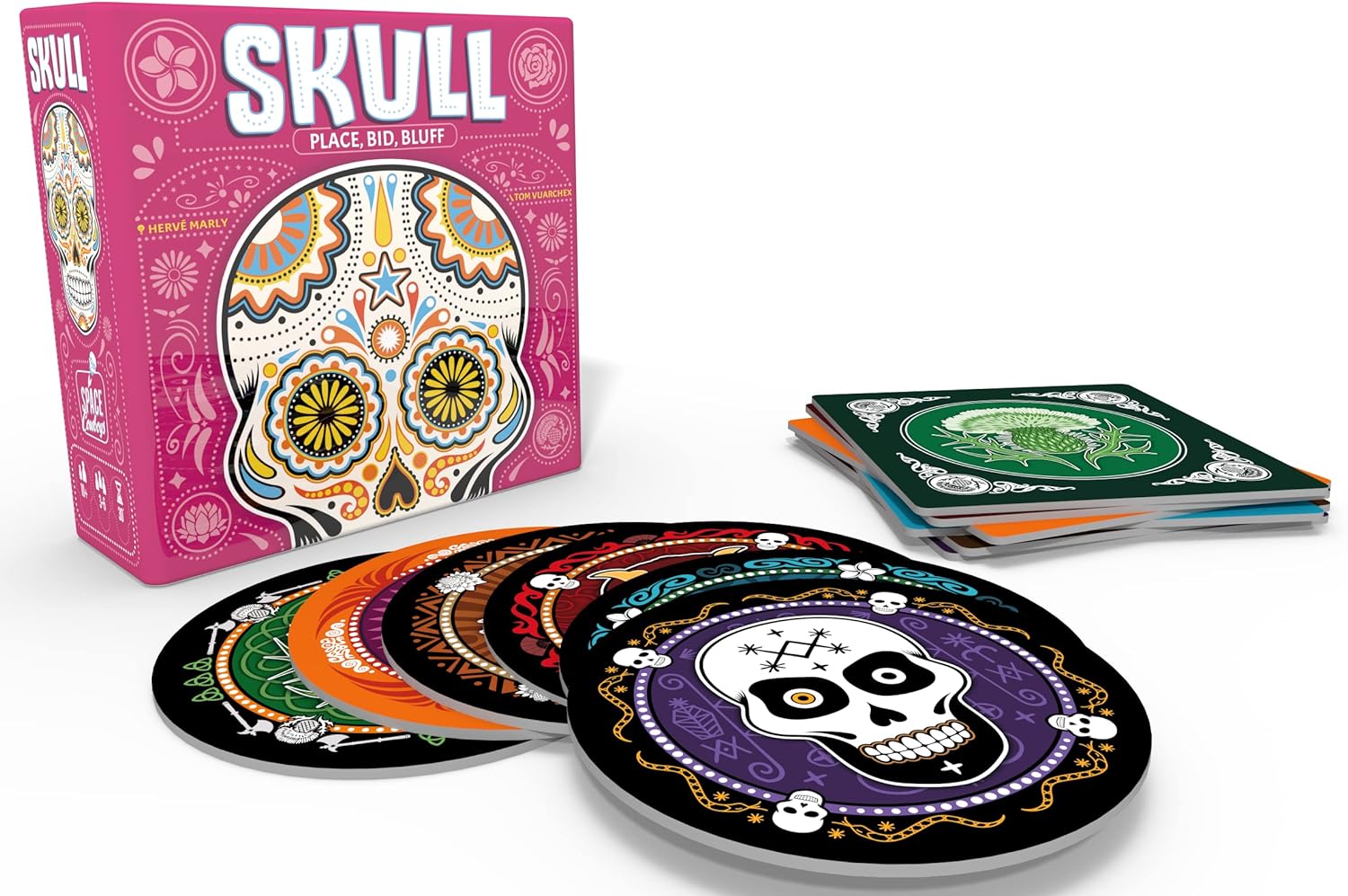 | Skull | 3–6 | 15–45 min | $ |
 | Coup | 2–6 | 15 min | $ |
 | The Resistance: Avalon | 5–10 | 30–60 min | $ |
 | Secret Hitler | 5–10 | 45–60 min | $$ |
 | Sheriff of Nottingham | 3–5 | 60 min | $$ |
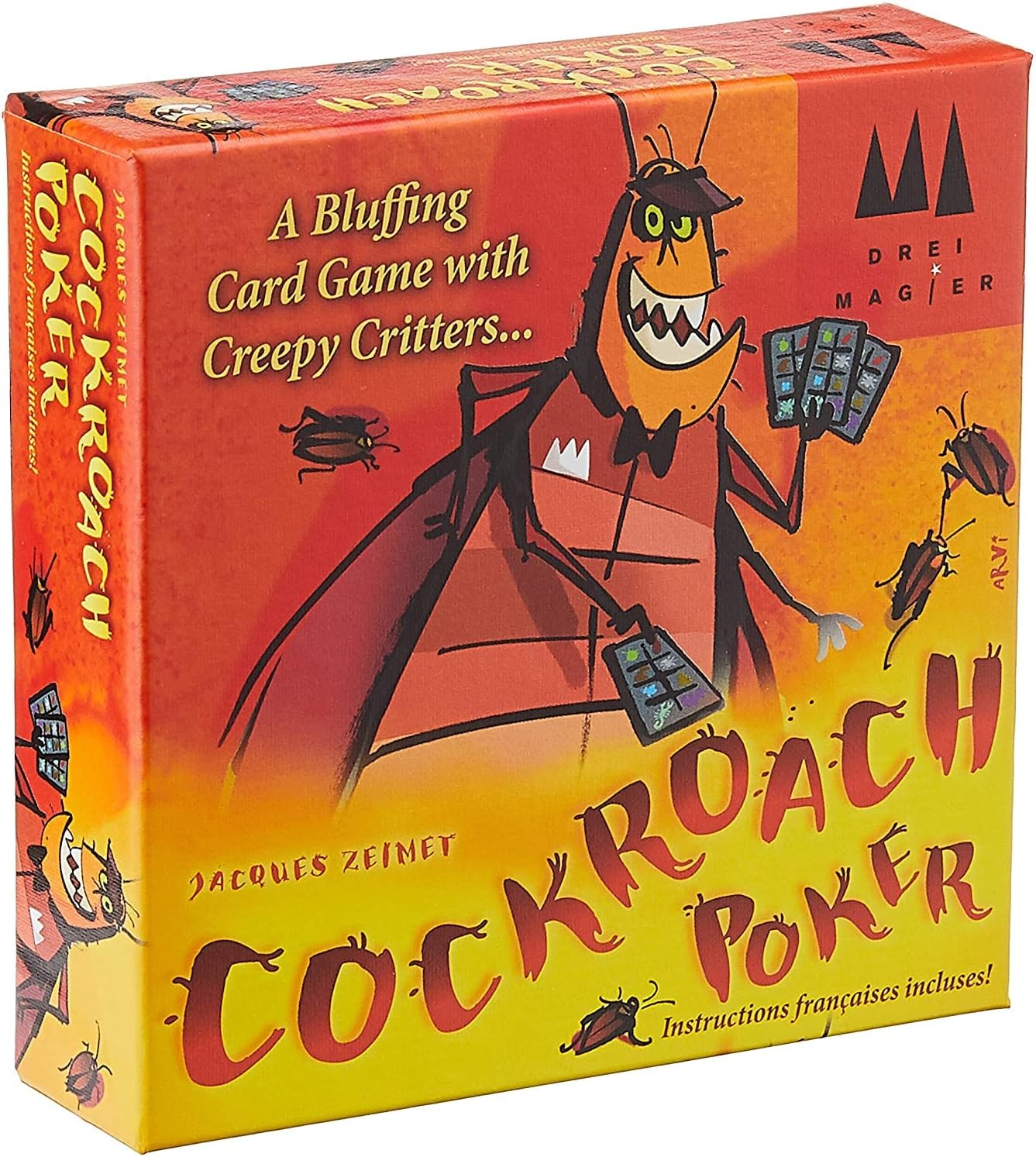 | Cockroach Poker | 2–6 | 20 min | $ |
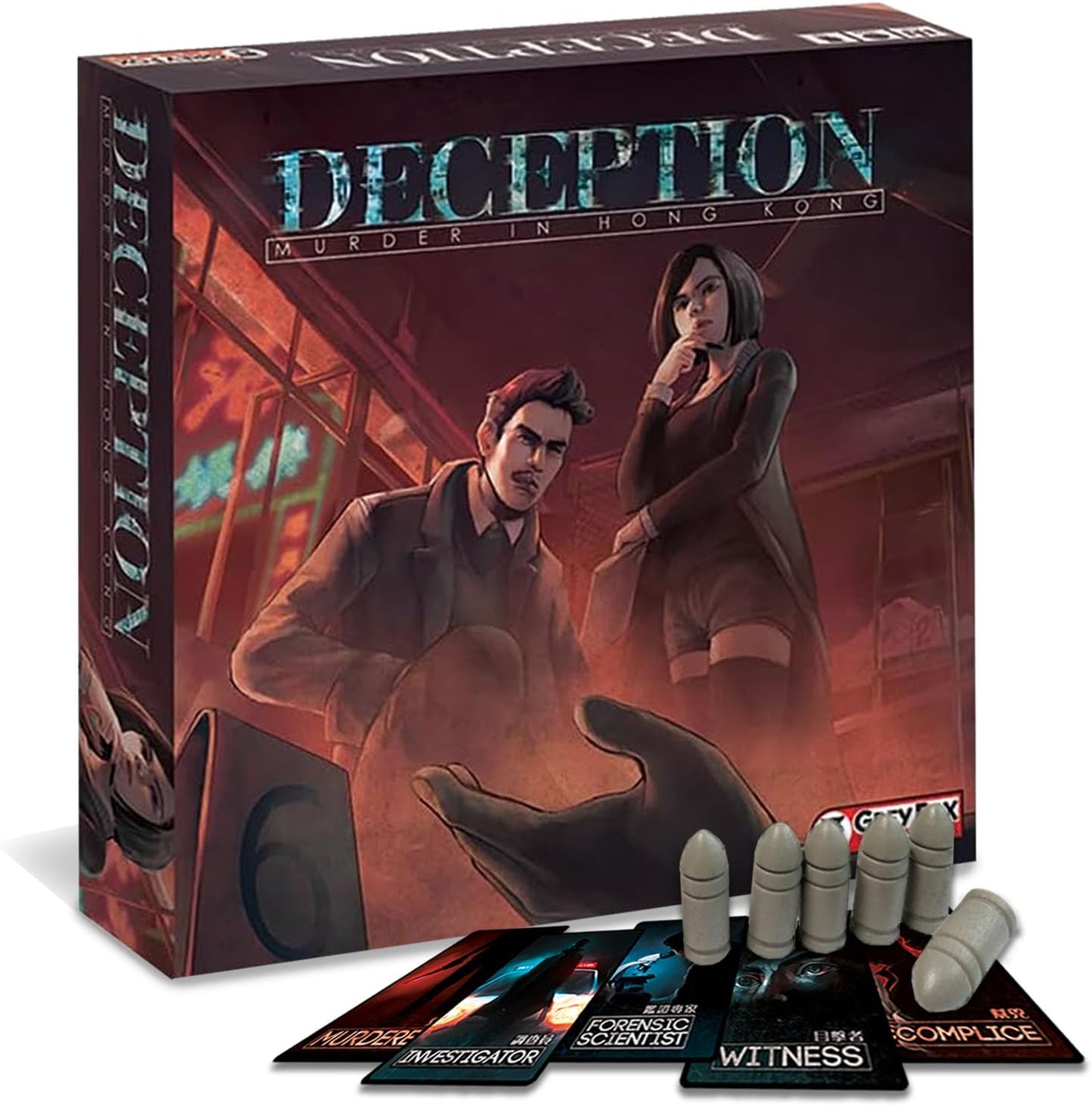 | Deception: Murder in Hong Kong | 4–12 | 20 min | $$ |
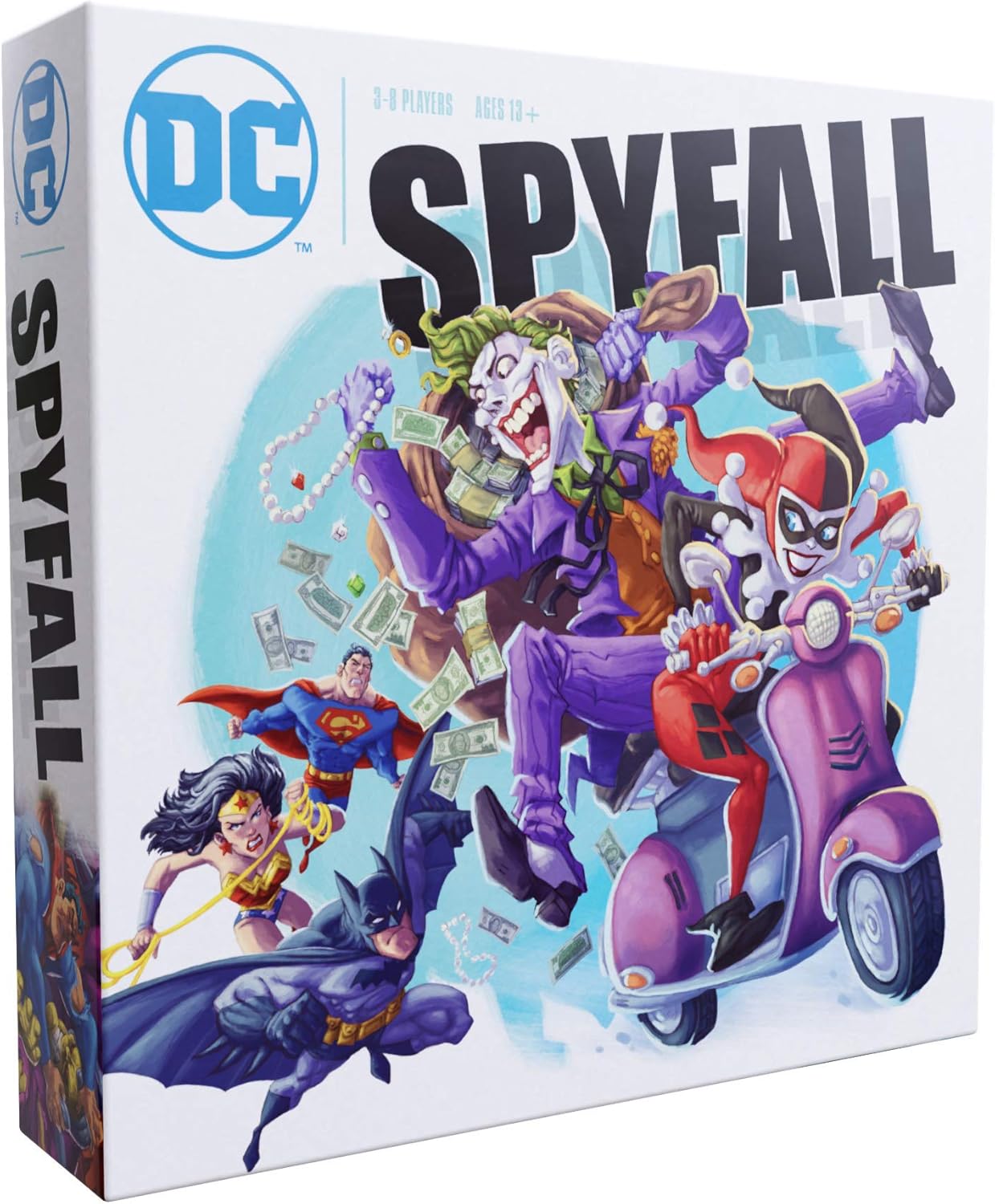 | Spyfall | 3–8 | 15 min | $$ |
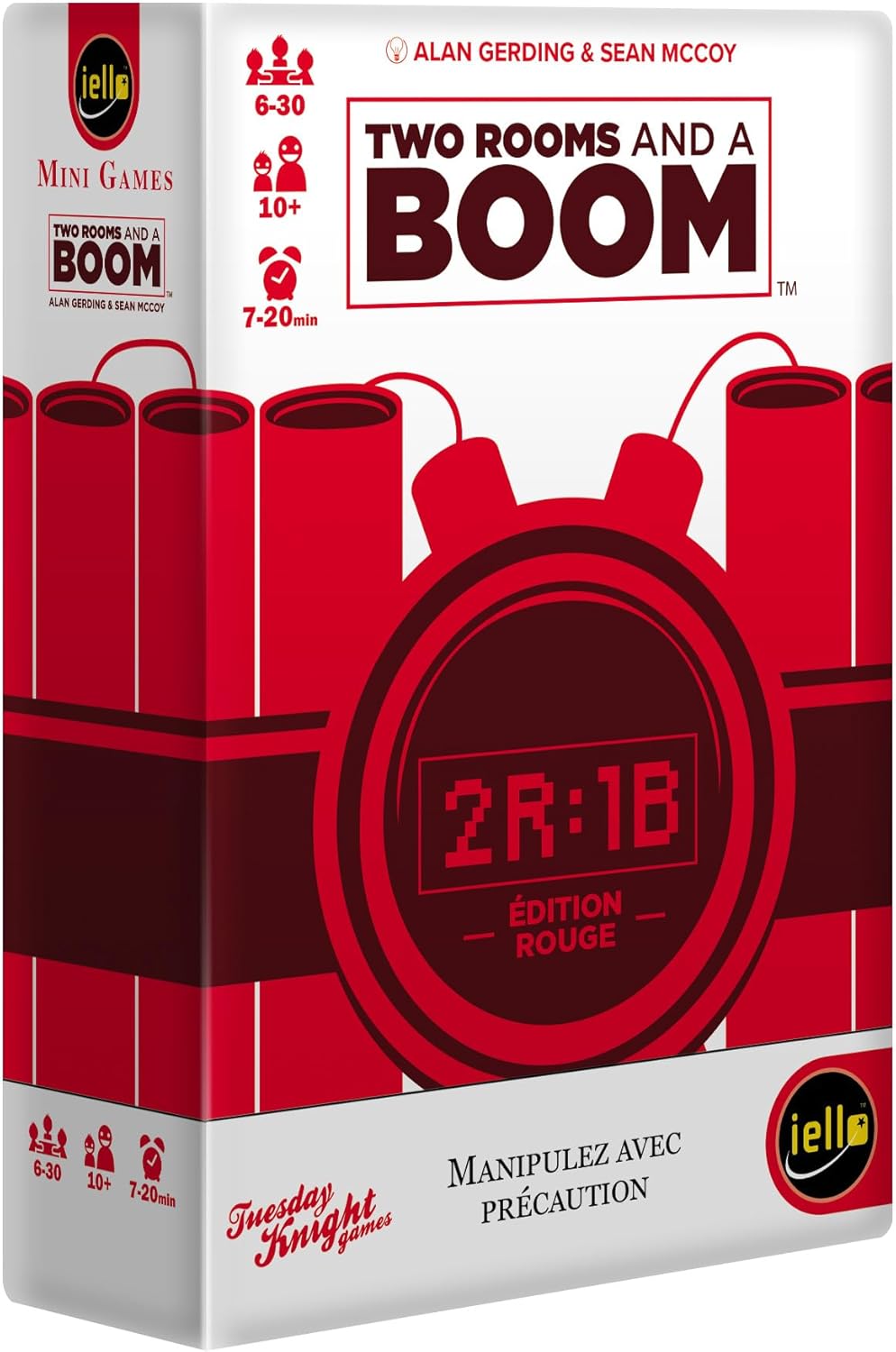 | Two Rooms and a Boom | 6–30 | 30 min | $ |
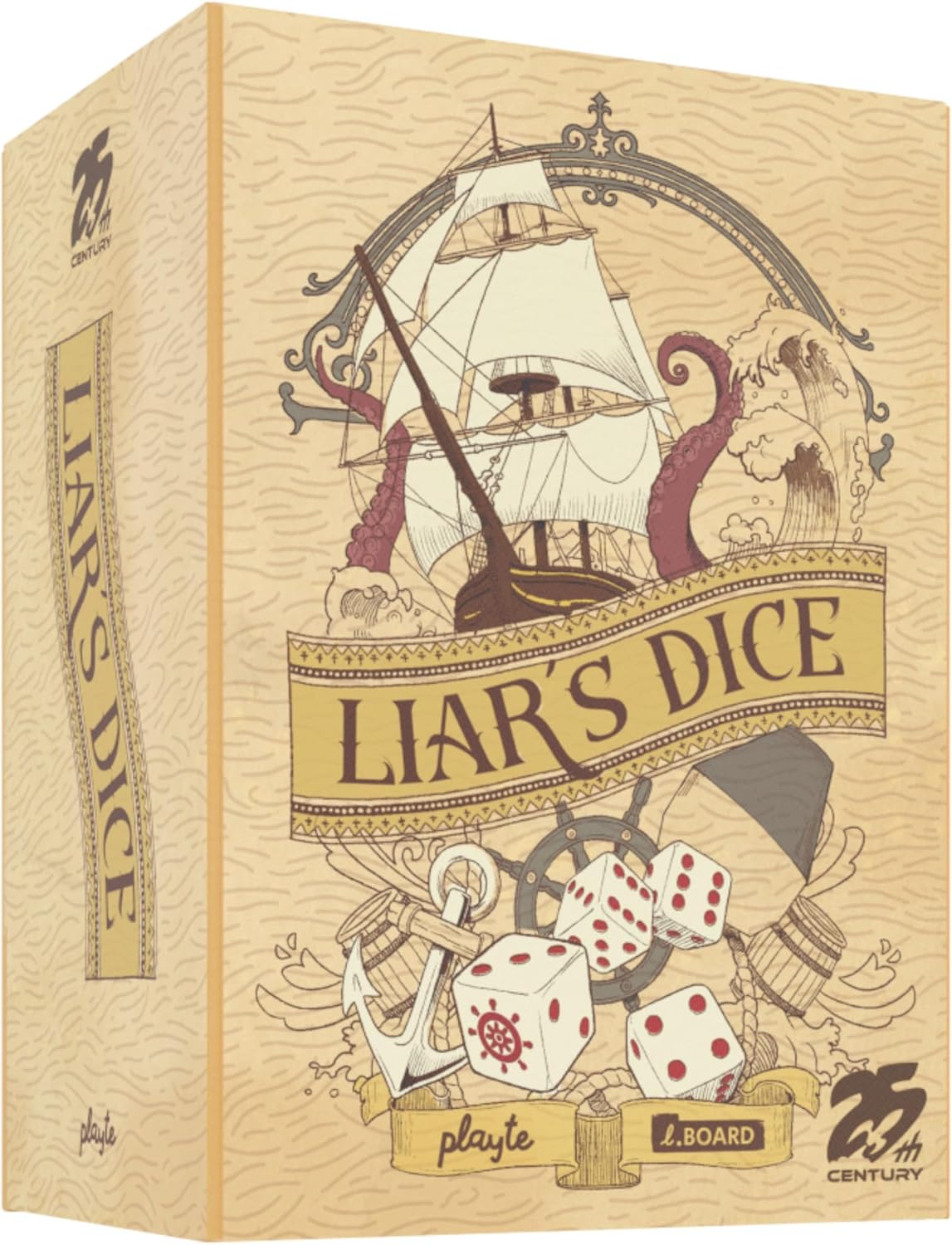 | Liar’s Dice | 2–6 | 30 min | $ |
1. Skull (Full Review Here)
Skull is the purest bluffing game on this list. There are no words, no hidden roles, no complicated setup. Each player has four coasters — three flowers and one skull — and you take turns placing them face-down in a stack. Then the bidding starts: players claim they can flip a certain number of coasters without hitting a skull. The bid goes up. Someone calls it. If they succeed, they flip two of their coasters to the winning side. If they hit a skull, they lose one of theirs. Lose all four and you’re out.
That’s it. The whole game.
What makes it so good is that all the complexity lives inside the bluff. Do you put your skull down first to trap someone? Or do you load flowers to bait them into overbidding? And when you’re the one flipping, whose pile do you start with — someone who looked confident, or someone who’s been quietly sitting on their skull all round? You’re reading people constantly, and there’s nothing mechanical to hide behind.
It plays in 20–30 minutes, works from 3 to 6 players, and you can teach the rules in about 90 seconds. Take it camping. Take it to the pub. Take it anywhere. It almost never overstays its welcome.
Plays best with: 4–6 players who are comfortable saying absolutely nothing and letting the stacks do the talking.
Caveat: Two players technically works but loses a lot of the social energy. Save it for a group.
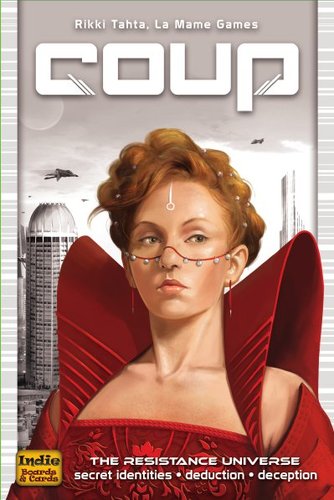
2. Coup (Full Review Here)
Coup lives in a fictional future where the government is run by a small ruling class and everyone is scrambling for power. Each player starts with two hidden character cards — Duke, Assassin, Captain, Contessa, or Ambassador — each with their own action. On your turn you take an action, claim the card you need to take it, and hope nobody calls you out. If they do and you were lying, you lose an influence. If they were wrong, they do.
The lying is mandatory. There aren’t enough good cards to go around, so you will claim to be characters you aren’t. Often. The art is in being believable about it — and in deciding when to spend your challenge on someone else’s bluff.
We’ve had all six players claim Duke in the same round. At that point the table just collapses laughing while simultaneously trying to figure out who’s telling the truth. That’s the game. It rewards confidence and punishes hesitation, which makes it a genuinely interesting personality test for whoever you’re playing with.
Games run 15 minutes. You can fit three or four rounds into an hour easily. At its price point, it’s one of the best values in board games, full stop.
Plays best with: 4–6 players. At 2–3 it gets solved too fast. At 6 it gets beautifully chaotic.
Caveat: Experienced players sometimes gang up on whoever they perceive as the strongest — can feel unfair if you’re new.
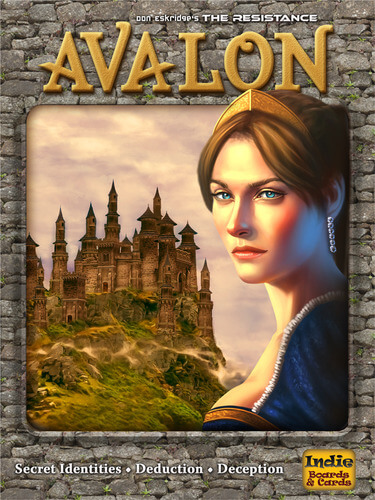
3. The Resistance: Avalon (Full Review Here)
Avalon takes the hidden-role format and builds a full team game around it. Players are either loyal servants of King Arthur or secret agents of Mordred. The loyal servants must approve quest teams and send them on missions — but they don’t know who among them is working against the cause. The evil players do know each other, and their job is to infiltrate quests and fail them without being caught.
The mission vote is the mechanic that makes this land. Everyone on a quest secretly plays a success or fail card. One failure card tanks the mission. But nobody knows who played it. So the debrief after each quest — the accusations, the defenses, the quiet recalibration of who you trust — is where the real game happens.
Some people call it a party game. It isn’t. It’s a strategy game with a party game energy. You’re watching who proposes what, who votes how, who shifts their story between rounds. After three games in one night, you’re genuinely tired. But three games in one night means the game is working.
Plays best with: 7–8 players. Too few and the evil team’s coordination becomes obvious; too many and the good team can’t track enough information.
Caveat: If your group includes people who disengage when they’re eliminated or who can’t handle being lied to, this one will test them.
4. Secret Hitler
Secret Hitler is Avalon’s more approachable, more immediately dramatic cousin. The setup: players are liberals or fascists (one of whom is Hitler). Liberals need to pass a certain number of liberal policies. Fascists need to either pass enough fascist policies or get Hitler elected Chancellor. Each round, a President and Chancellor pair draws policy cards and enacts one — but the cards they pass between themselves are hidden from the table.
This is where the game gets messy. The two liberal policies and one fascist policy you drew from the deck? You secretly discard one and pass two to the Chancellor. If a fascist policy gets enacted, both players can plausibly blame the deck. The accusations pile up fast.
What Secret Hitler does better than most hidden-role games is generate information naturally. Every policy enacted tells you something. Every President’s claim about what they drew tells you something. Every vote on a government tells you something. By the end, you have enough data to reason — but never quite enough to be certain.
Plays in 45–60 minutes with 8–10 people. With 5–6 it’s quicker and slightly more transparent, but still good. The physical components are excellent — the policy tiles, the ballots, the election tracker. It feels like an artifact.
Plays best with: 8–10 players for maximum chaos and information density.
Caveat: The theme is a lightning rod for some groups. Worth checking before you put it on the table.
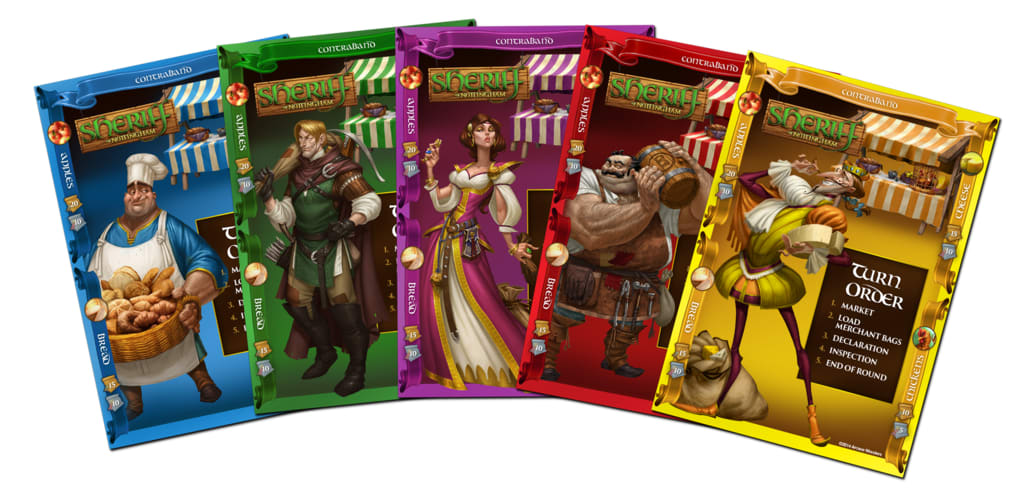
5. Sheriff of Nottingham (Full Review Here)
Sheriff of Nottingham puts you in a medieval market where everyone is trying to smuggle goods past the Sheriff — who rotates between players each round. You pack cards into a bag, declare what’s in it (legally: apples, cheese, bread, chicken), and pass it to whoever is wearing the Sheriff badge. They can let you through or inspect. If they inspect and you were telling the truth, they owe you. If they were right that you were lying, you owe them.
The negotiation layer is what sets it apart from other bluffing games. You can bribe the Sheriff. You can make deals. You can threaten to be extra aggressive when it’s your turn to be Sheriff. There’s a real economy of favors happening on top of the core bluff.
It plays in about an hour with 3–5 players and works well with people who aren’t necessarily into heavy strategy. The theme is easy to inhabit, the mechanics are clear, and the moment when the Sheriff decides whether to open your bag is genuinely tense every single time.
Plays best with: 4–5 players. At 3 the Sheriff can see too clearly who’s been naughty.
Caveat: Some Sheriff players are too lenient (want to keep the peace) and some are too aggressive (inspect everything). Both extremes flatten the game. Best with a group that finds the middle.
6. Cockroach Poker
No board. No elaborate setup. Just a deck of cards featuring scorpions, cockroaches, flies, bats, stink bugs, rats, frogs, and toads. On your turn you take a card, slide it face-down across the table to another player, and declare what it is. They decide: believe you and flip it, challenge you and flip it, or pass it along with their own claim.
If you’re wrong — whether you were believing, challenging, or re-passing — the card goes in front of you face-up. Collect four of the same creature and you lose.
It’s the fastest game to explain on this list and the one that gets most people screaming. The logic of it is simple enough that you can play it immediately, but the mind games go deep. Do you tell the truth early to build credibility and then lie later? Do you start aggressively lying to set up a reputation? Do you target the person with three flies already in front of them?
This one travels well. Fits in a jacket pocket. Great warm-up game, great late-night wind-down game. Plays 2–6 but shines at 4–5.
Plays best with: 4–5 players who have a tolerance for being publicly called out.
Caveat: The loser condition (four matching cards) means one person can feel specifically targeted. Which is, admittedly, part of the fun.
7. Deception: Murder in Hong Kong (Full Review Here)
Deception is a murder mystery where one player is the Murderer, one is the Forensic Scientist who knows the truth but can only communicate through scene tiles, and everyone else is an Investigator trying to figure out who did it and with what weapon. The Murderer sits at the table the whole time, contributing to the investigation, steering it wrong.
The Forensic Scientist can’t speak. They can only place tiles on the scene board — vague clues like “something related to water” or “a strong smell” — and the investigators have to parse what those clues mean against the actual weapon and clue cards in play. Meanwhile the Murderer is sitting right there offering theories that conveniently never land on themselves.
It plays 20 minutes and handles up to 12 players, which makes it a standout for large groups. The first time you realize the Murderer has been sitting there calmly helping you and is the last person you suspected — that’s the moment. We’ve had people feel genuinely betrayed.
Plays best with: 6–8 players. Below that, the investigator field is too small. Above 10 it can get loud.
Caveat: The Forensic Scientist role is hard to play well on your first time. Consider assigning it to an experienced player or giving them a round to observe first.
8. Spyfall
Everyone gets a card showing the same location — an airport, a submarine, a circus, a space station — except one player, who gets a Spy card and has no idea where they are. Players take turns asking each other questions about the location. The Spy tries to figure out where they are by listening carefully and bluffing their own answers. Everyone else tries to identify the Spy without being so obvious that the Spy just uses their answer to identify the location.
It’s a genuinely tricky problem. If you ask too specific a question, you basically hand the Spy the location. If you ask too vague a question, nobody learns anything useful. The Spy is simultaneously playing defense (give answers that sound plausible for somewhere) and offense (gather enough clues to guess the location before time runs out and save themselves).
Rounds run about 8 minutes. You’ll want to play at least three or four back-to-back. It works well with groups that include non-gamers because the premise is simple and the laughs come fast — especially when someone asks a question that accidentally reveals they have no idea what they’re doing.
Plays best with: 5–7 players.
Caveat: With players who are naturally terse, the questions-and-answers round can drag. Push people to commit to actual answers, not just one-word responses.
9. Two Rooms and a Boom
Two Rooms and a Boom needs space — literally. Players split into two groups in two separate rooms (or opposite sides of a large space) and assign roles: most are civilians, but hidden among them are a President and a Bomber. The President’s team wins if they keep the President alive at the end. The Bomber’s team wins if the Bomber ends up in the same room as the President.
Each round, teams negotiate and exchange hostages — players physically move to the other room — and the social engineering is everything. Who do you send as a hostage? Who do you demand back? Who’s claiming to be on your team, and are they telling the truth?
It handles a huge player count (6 to 30+) in a way no other game on this list manages. The chaos is the point. Everyone is active for almost the entire game — nobody is sitting at a table waiting for their turn. It’s unusual and loud and the kind of thing people talk about afterward.
Plays best with: 10–20 players. Under 10 the room dynamics don’t have enough mass to create real tension.
Caveat: It requires a physical space that actually allows two separate rooms, or at minimum a space large enough that the groups can’t hear each other. Works great at parties; less so at a dining table.
10. Liar’s Dice
The oldest game on this list. Everyone gets five dice and a cup. You roll, hide your dice, then players take turns making bids on what’s showing across all the dice on the table combined — “there are at least six threes out there.” The next player must either raise the bid or call the previous player a liar. If the challenger is right, the bidder loses a die. If they’re wrong, the challenger does. Lose all your dice and you’re out.
It’s been around forever for a reason. The pure math of it — how likely is a given bid based on how many dice are still in play — gives experienced players something to anchor to. But bluffing aggressively can override the math, and beginner luck absolutely exists here. That balance keeps it interesting across skill levels.
It plays fast, scales from 2 to 6 easily, and needs nothing but the box. A great option for a group that wants something familiar but with real stakes.
Plays best with: 4–6 players.
Caveat: Can feel solvable by people who lean heavily into the probability side. If you’re playing with a statistician, expect them to win a lot.
Conclusion
If you want the fastest possible entry point, start with Skull or Cockroach Poker — both explain in under two minutes and deliver immediately. If you have 6–10 players and want something with real depth, The Resistance: Avalon or Secret Hitler will give you a proper session. Sheriff of Nottingham is the one for groups where not everyone is a dedicated gamer — the theme does a lot of the lifting. And Deception: Murder in Hong Kong is the move for large groups who want something a little different from the standard hidden-role format.
Any of these will earn a spot in your regular rotation. The real question is which kind of liar your group wants to be.
If you’re into games with social deduction and player interaction, you might also enjoy our Best Social Deduction Board Games list or take a look at the Coup Review if you want a deeper look at our favourite on this list.
Thumbnail image artificially generated for illustrative purposes.