Most board games live in your head. You sit there analyzing cards, calculating points, plotting three moves ahead. Dexterity games are different. They pull you out of your brain and into your hands. Your fingers shake. You hold your breath. Someone knocks the whole thing over and the table erupts.
Click here to jump to the comparison table…
We’ve played a lot of dexterity games over the years, and this category has become one of our favourites for game nights where we want everyone locked in — not drifting on their phones between turns. When you’re watching someone slowly lower a wooden rhino onto a teetering tower, or flicking a disc across a hand-crafted wooden board, everyone is watching.
The category is broader than you’d think. Dexterity games include flicking games, stacking games, magnet games, reaction speed games, and everything in between. We tried to cover the range here — from games you can learn in two minutes to ones with more meat to them.
What We Were Looking For
When putting this list together, we prioritized:
- Accessibility — the mechanic should be learnable in one round, even if mastery takes longer
- Table energy — games that keep everyone engaged, not just the person whose turn it is
- Variety — different styles of play, different player counts, different price points
- Replay value — you should want to play again as soon as the game ends
We didn’t limit ourselves to games we already owned. This is what we consider the genuine best in the category right now.
Best Dexterity Board Games Comparison Table
(Click the thumbnail to jump down to the entry)
| Image | Game | Players | Time | Price | Our Rating |
|---|---|---|---|---|---|
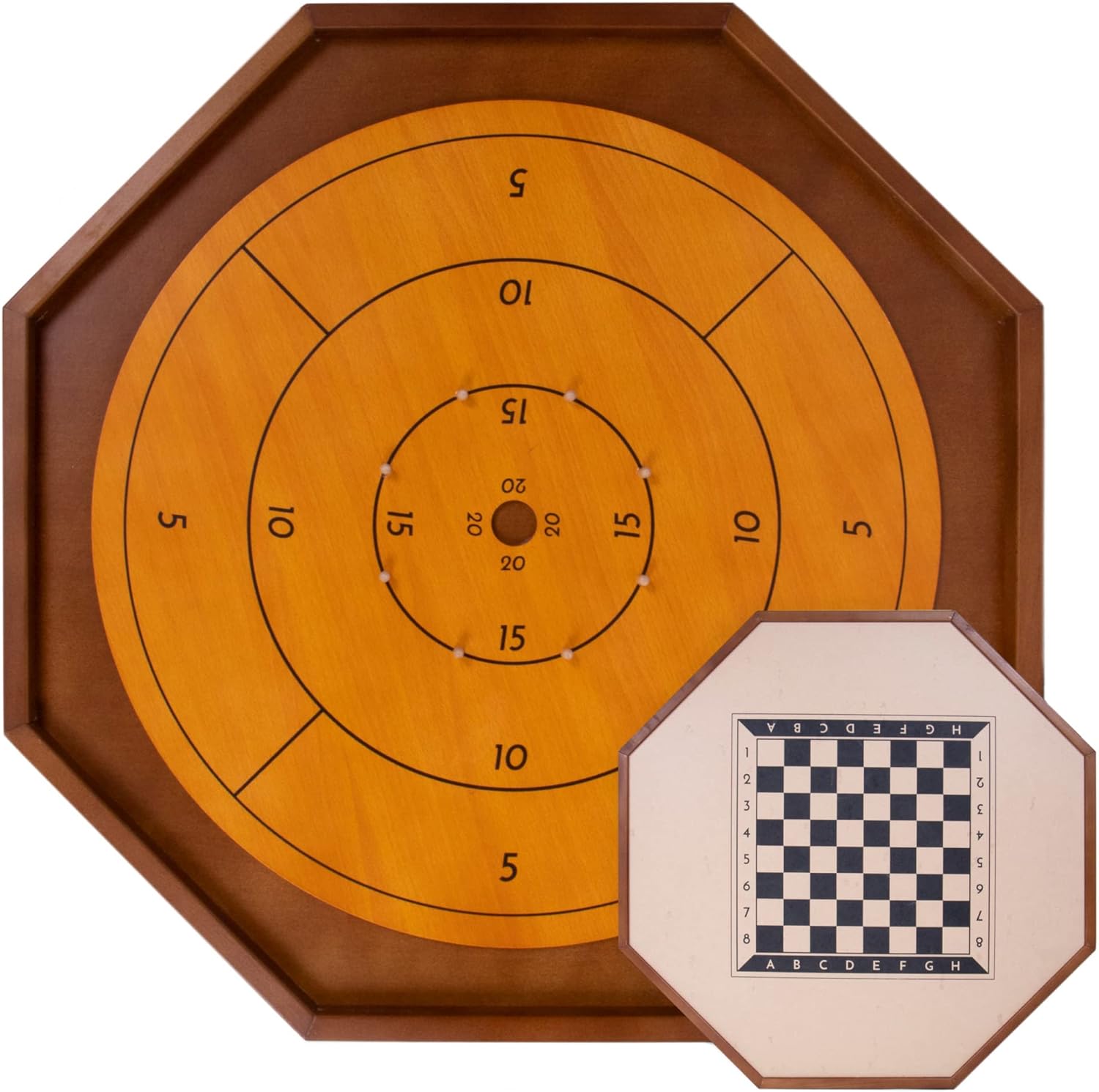 | Crokinole | 2–4 | 30 min | $$$$ | — |
 | Klask | 2 | 15–30 min | $$$ | — |
 | Rhino Hero | 2–5 | 15 min | $ | — |
 | Ice Cool | 2–4 | 20–30 min | $$ | — |
 | Junk Art | 2–6 | 30 min | $$$ | — |
 | Flick ‘em Up | 2–10 | 30–45 min | $$$ | — |
 | Catacombs | 2–5 | 60–120 min | $$$$ | — |
 | Suspend | 2–4 | 20 min | $$ | — |
 | Beasts of Balance | 1–4 | 30 min | $$$ | — |
 | Ghost Blitz | 2–8 | 20 min | $ | — |
1. Crokinole
If there’s a single game that earns the crown of best dexterity game ever made, most serious enthusiasts would say it’s Crokinole. And honestly? They’re right.
The premise is simple: you sit around a round wooden board, flick small wooden discs from your side toward the center hole, and try to outscore your opponents while knocking their discs off the high-value zones. If no opponent disc is on the board, your disc has to reach the center ring or it comes off. Sounds easy. It is not easy.
What makes Crokinole special is the feedback loop. Every flick teaches you something. You can feel a good shot before it lands — the disc skims the polished surface, clips a peg, curves perfectly into the scoring zone. Bad shots sting in your fingers. There’s a tactile satisfaction here that almost no other game replicates.
It plays 2 or 4 players (teams of two). The 4-player team format is where the game truly shines — you and your partner alternate flicks, and there’s a great cooperative rhythm to figuring out positioning together.
The one honest downside: the price. A quality Crokinole board runs $80–$200+. There are budget options, but the cheaper boards don’t play as well — the surface matters a lot. This is an investment. If your group plays it even a handful of times, it pays off. But it’s not an impulse buy.
If you can try one before committing — at a game café or a friend’s place — do it. We’d bet you walk away needing to own it.
2. Klask
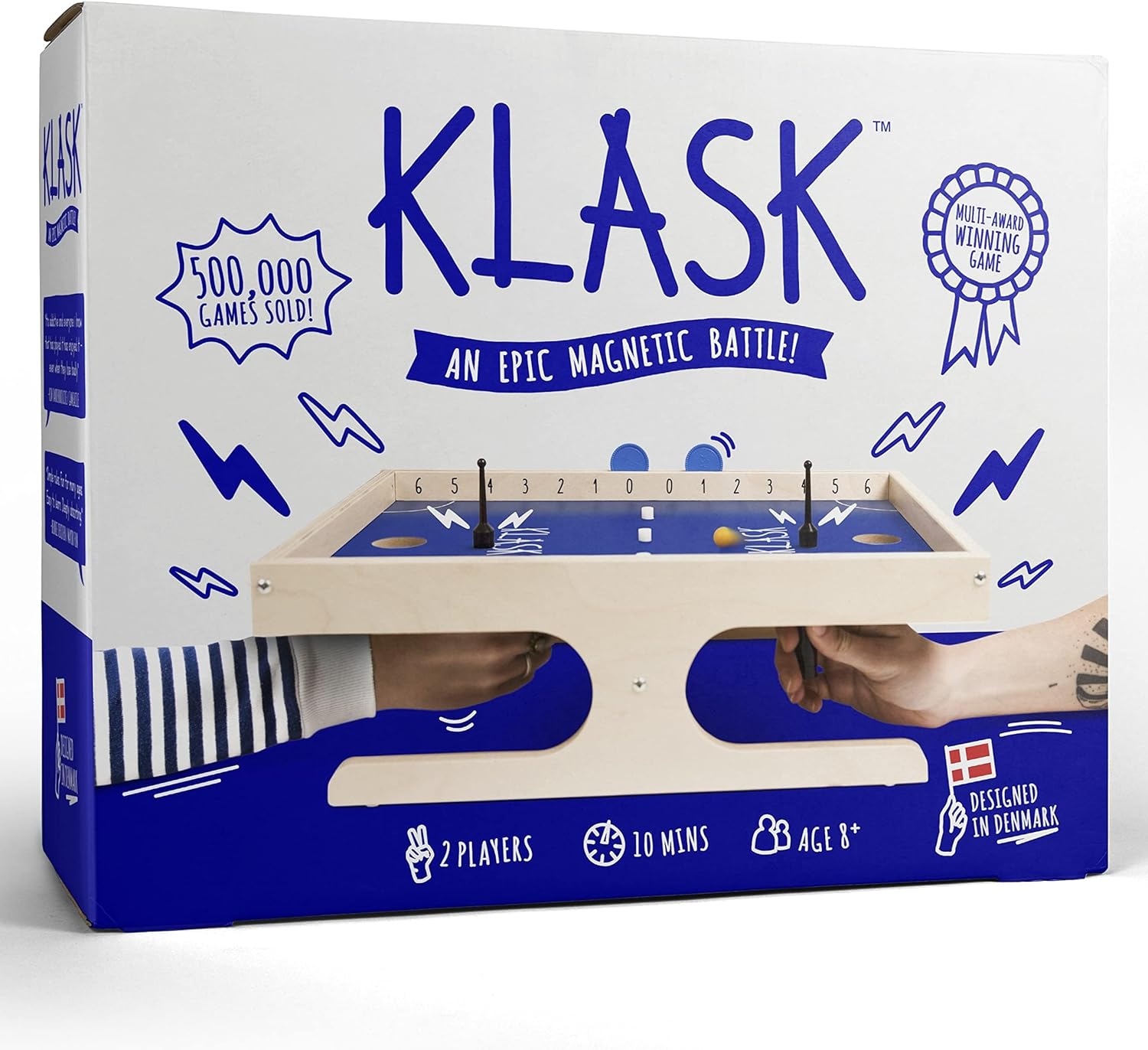
Klask is what happens when someone asks “what if air hockey had magnets and a scoring system that punishes you for getting too close to your own goal?” It’s from Denmark, it won a ton of awards when it came out, and it absolutely delivers.
Each player controls a striker with a magnet from underneath the table. You use your striker to hit a small ball into your opponent’s goal. But there are three small white magnetic “biscuits” floating in the middle of the board — if two of them stick to your striker, you automatically lose a point. If you fall into your own goal, same thing.
The magnet control mechanic is the hook. It sounds fiddly until you pick it up, and then you realize how intuitive it is. Jerky movements get you punished. Smooth, deliberate control wins. The skill gap between a new player and someone who’s played ten times is obvious, but even new players can score lucky goals — the game stays competitive across experience levels.
Klask is strictly two-player, which limits it for larger groups. As a head-to-head dexterity showdown though, it’s as satisfying as the category gets. We’ve had tournaments run out of what was supposed to be a five-minute warm-up.
Worth every penny at its price point.
3. Rhino Hero
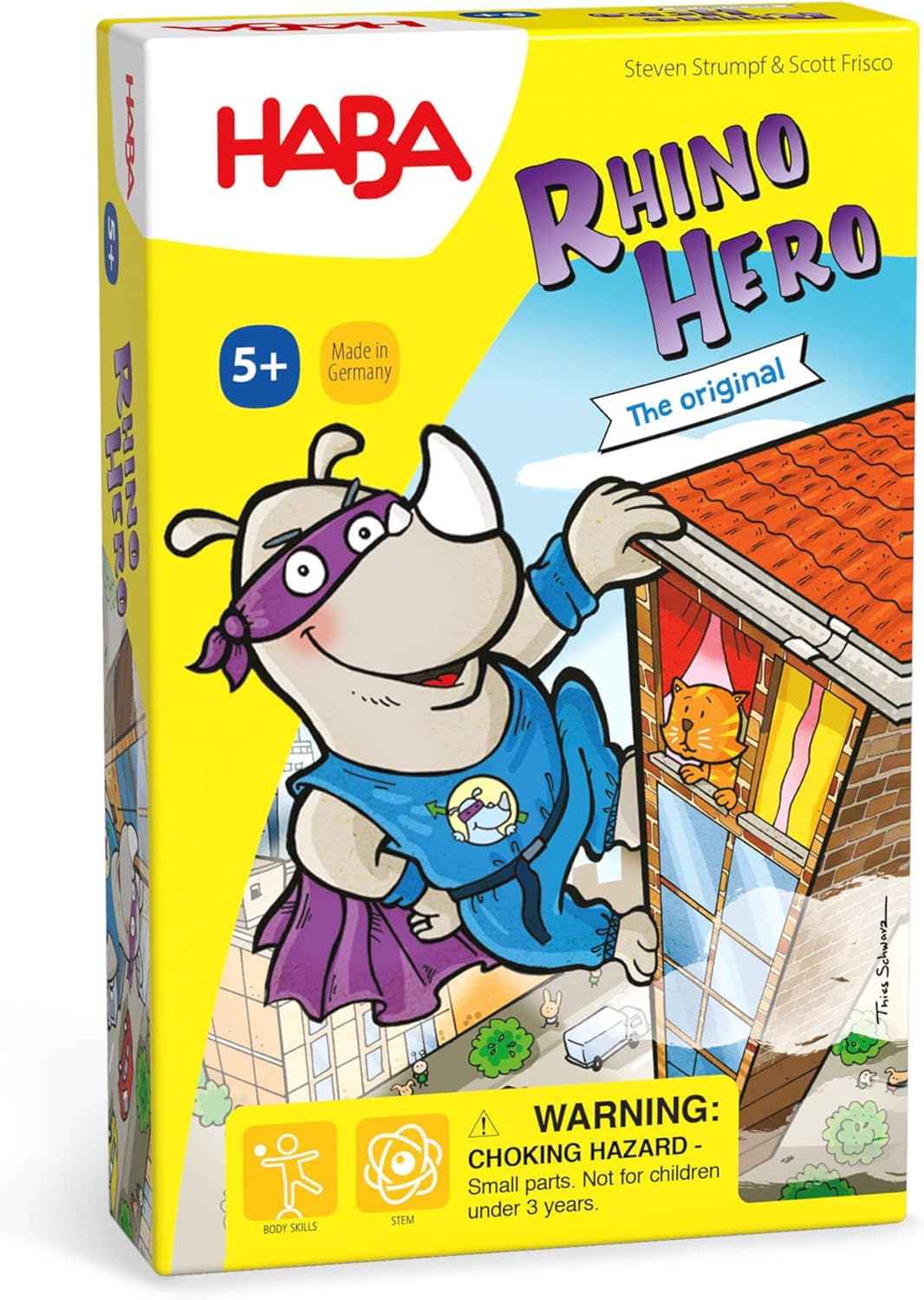
Rhino Hero is the purest version of “build it up until someone knocks it over.” It plays 2–5, takes about 15 minutes, and is one of those rare games that genuinely works for a six-year-old and a sixty-year-old at the same table.
Each turn you play a card that dictates the shape of the next “wall” — you fold the card and add it to the growing tower. Then you place a floor tile on top. Some cards force you to move the little wooden rhino superhero figure up to a new level, which wobbles everything. The tower gets taller, spindlier, more alarming with every floor.
The tension is real. We’ve had towers that looked stable for 12 floors suddenly shudder and lean at an angle that had everyone frozen. The person who causes the collapse takes back all their played cards — and the person who plays the last card wins.
It’s a short game so it gets played multiple times in a row almost every time. The components are excellent for the price. The rhino figure is absurdly charming. Nothing complicated, pure table drama.
If you have kids or mixed-age groups and want a dexterity game that generates actual excitement, start here.
4. Ice Cool
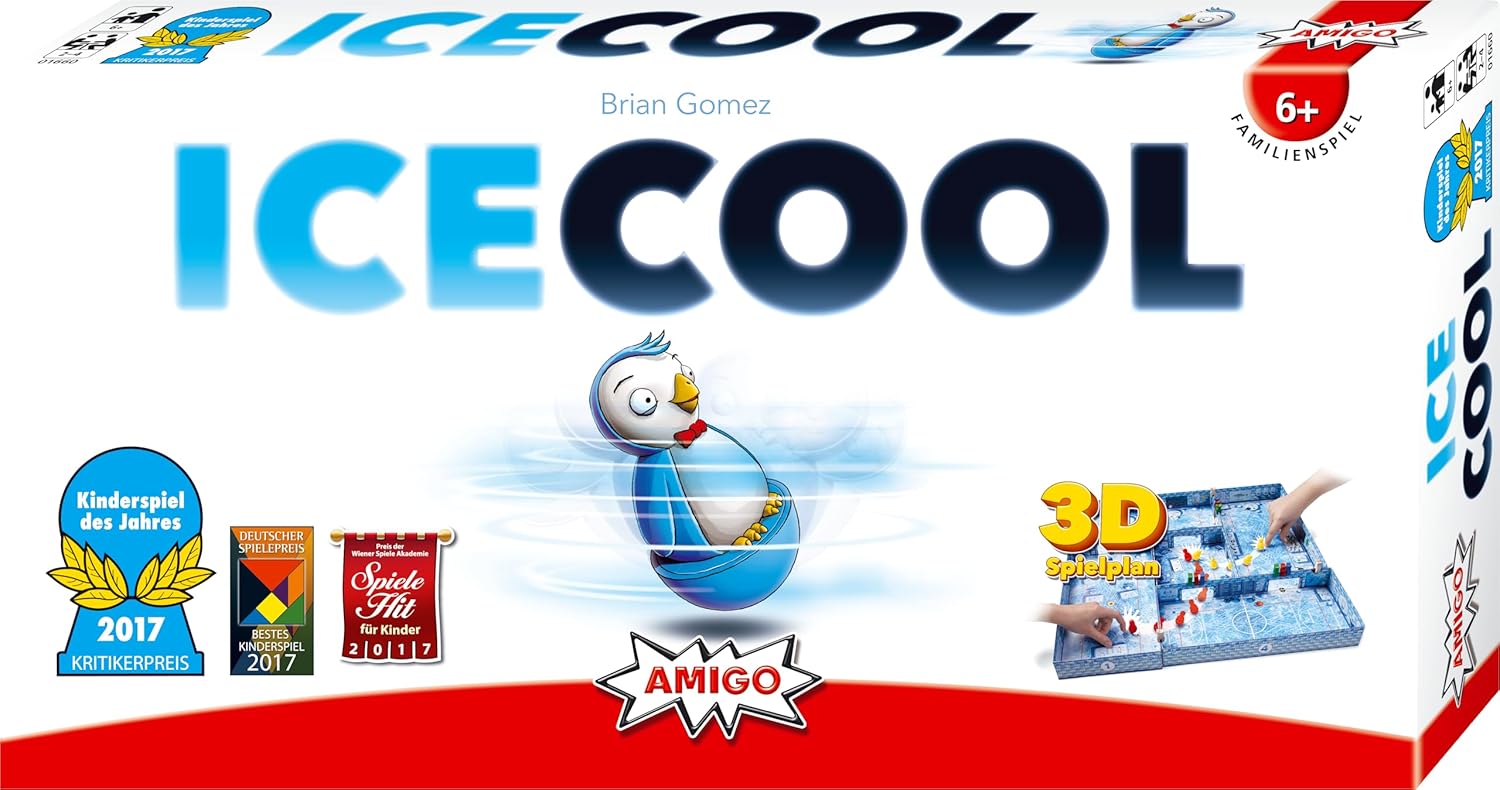
Ice Cool is a flicking game set inside a penguin school, and that premise is exactly as delightful as it sounds. The box itself forms the game board — three rooms that slot together — and the penguin pieces are bottom-heavy rounded pieces that wobble and curve when you flick them right.
One player is the hall monitor (the catcher). Everyone else is a student trying to run through doorways to collect fish tokens. If you flick your penguin through a doorway, you grab the fish hanging there. If the catcher tags you by flicking their penguin into yours, you’re out for the round. Most fish at the end wins.
The curve shots are the thing. When you flick a standard flat disc, it goes straight. When you flick a rounded penguin at an angle, it curves. Learning to bend your penguin around a corner or through a crooked doorway feels like a superpower the first time you land it. It’s consistently the shot that gets a reaction from the table.
Ice Cool is best at 3–4 players. At two it works but loses some chaos. At the full table of four it’s perfectly paced and unpredictable. Strong choice for families, strong choice as a lighter opener for game nights. The Spiel des Jahres nomination it earned in 2017 was well deserved.
5. Junk Art
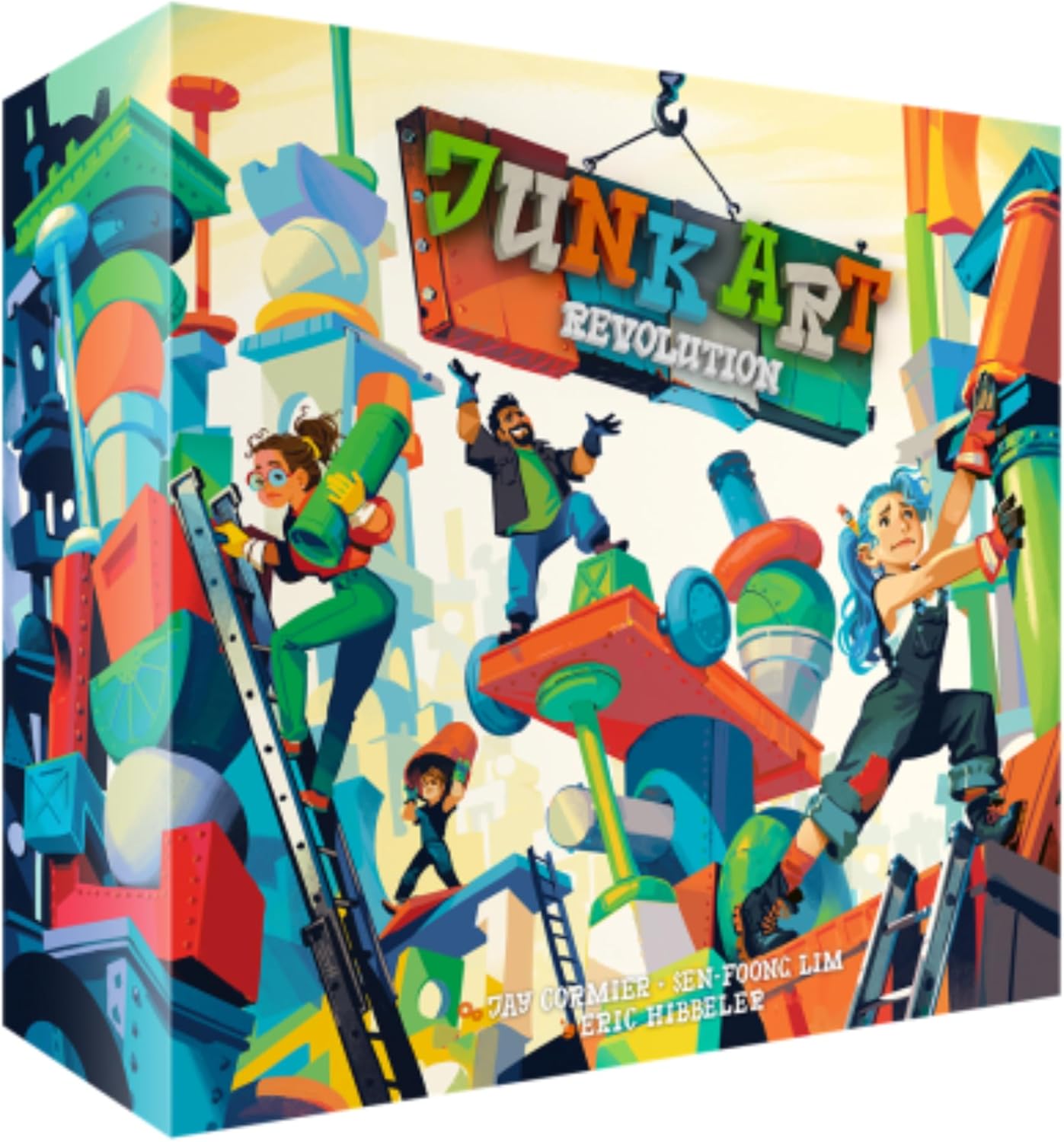
Junk Art is a stacking game that comes with more weird-shaped wooden and plastic pieces than you’ll know what to do with. Cylinders, cones, rectangles, little curved bits. The goal is to stack them into structures without anything falling off.
What sets Junk Art apart is that it comes with a deck of city cards, each with a different game mode. Some rounds everyone builds on the same base. Some rounds you’re building on your neighbour’s structure. Some rounds the cards tell you which piece you must add to someone else’s tower. Each mode plays differently enough that you’re essentially getting multiple games in one box.
The components are beautiful. The pieces have that smooth tactile quality you want in a premium wood game. It photographs well, looks great on a shelf, and arrives in a package that feels like an event to open.
It scales nicely from 2–6, though 3–5 is the sweet spot. At two players it can feel a little flat; at six it gets chaotic in a good way. A full game runs about 30 minutes, though rounds can be shorter depending on which mode you pick.
One caveat: it’s pricier than other stacking games in this category. But the variety of modes means you’ll keep reaching for it long after a simpler game would start collecting dust.
6. Flick ‘em Up
Flick ‘em Up takes the dexterity mechanic and builds an actual scenario game around it. You’re playing cowboys and outlaws in a wild west showdown. Buildings get arranged on the table. Characters take cover. You flick wooden discs to move your cowboys and flick bullets to shoot opponents.
The scenario structure is what makes this different from every other flicking game on this list. You’re not just racking up points — you’re storming a building, ambushing a stagecoach, defending a saloon. There’s narrative in the gameplay. Getting hit costs you health tokens; run out and your character is down.
Setting up each scenario takes a few minutes, and the rulebook for early scenarios walks you through the new mechanics. After two or three plays you can build your own setups.
It supports up to 10 players, which is remarkable for a dexterity game. With a large group it becomes chaotic and hilarious. With 4–6 players, the tactical element holds up better — you’re thinking about angles, cover, and coordinating with your team.
The wooden version is the one to get if you can find it. The plastic version exists too but the wooden components are worth it. If your group likes something meatier than a pure stacking or flicking game, Flick ‘em Up is the bridge.
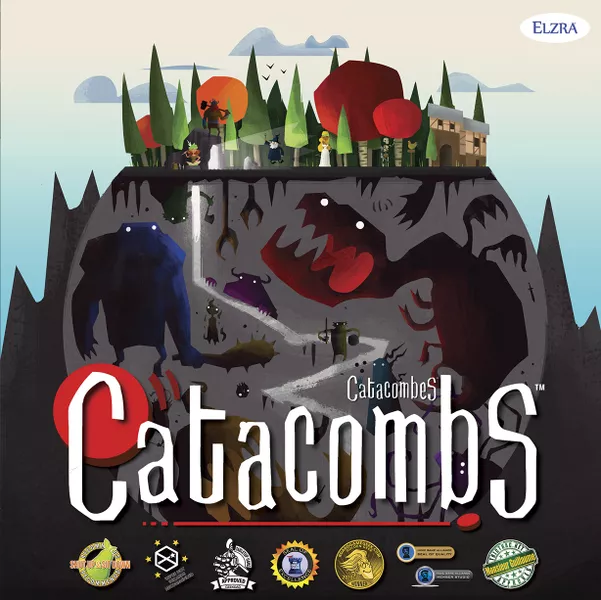
7. Catacombs
Catacombs is the deepest game on this list by a significant margin. It’s a dungeon crawler where one player controls the monsters and up to four others play heroes — but instead of dice and stat blocks, all combat is resolved by flicking wooden discs.
Your archer shoots by flicking a small disc across the room toward an enemy. Your wizard lobs a fireball. The monster player flicks goblin discs back. Discs that land in range deal damage; discs that miss just clatter uselessly on the table. Every fight is physical.
Rooms are drawn from a deck, so the dungeon generates itself. Heroes progress through several rooms before facing a boss. Between rooms you can visit shops and spend coins on upgrades. There’s a full arc to a game — setup, escalation, final confrontation.
It takes time. A full game runs 60–120 minutes and the setup isn’t trivial. It’s also not forgiving to new flickers — your accuracy matters, and early games can feel one-sided if the heroes struggle. Once the group builds some skill though, the balance improves and the tactical layer starts to shine.
For groups that want dexterity with genuine depth — a game that feels like a dungeon adventure, not just a carnival skill test — Catacombs delivers. It’s niche, it’s long, and it’s unlike anything else in this genre.
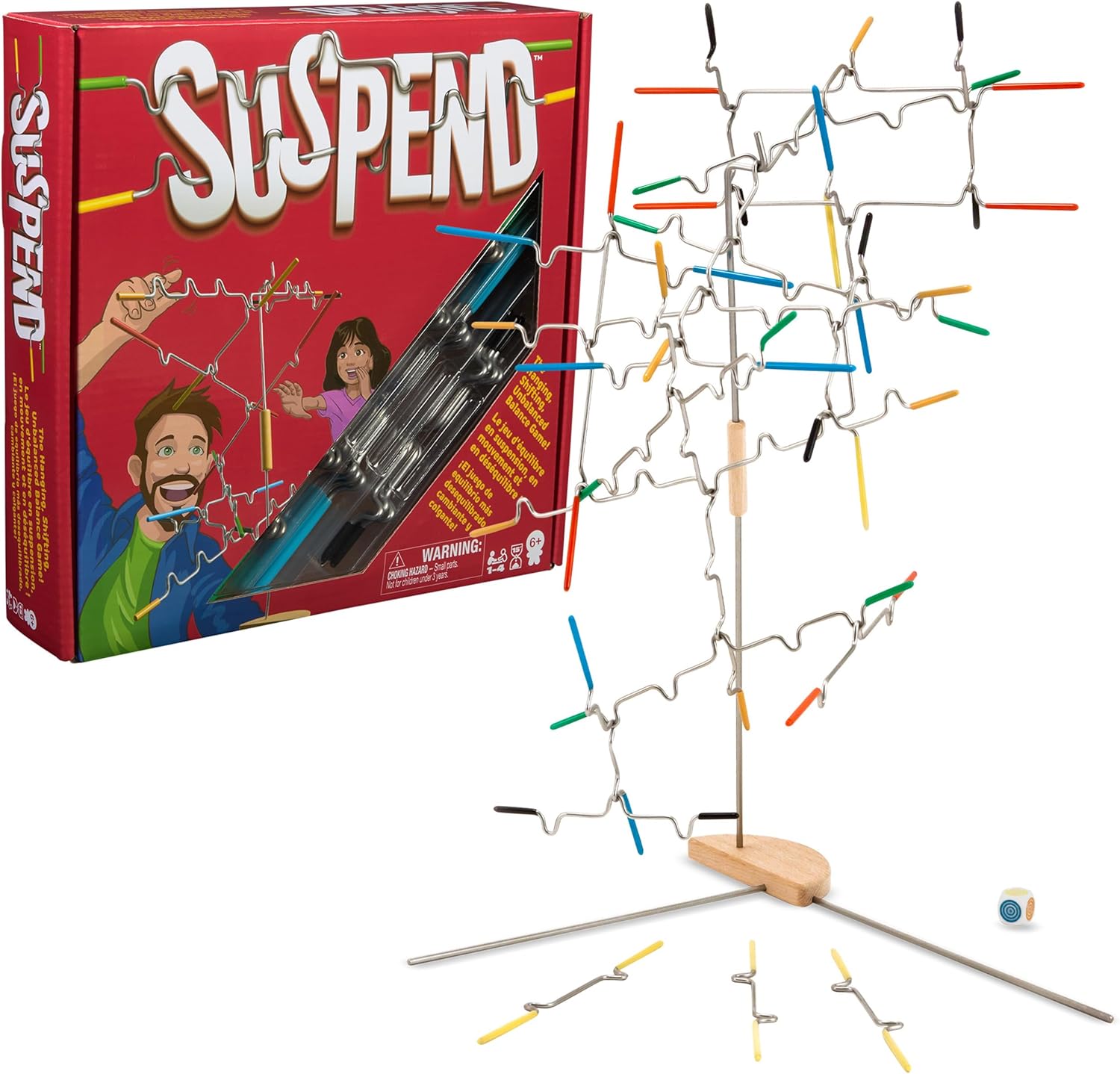
8. Suspend
Suspend is simpler and cheaper than most games on this list, but it earns its spot because of how well it works for mixed groups and kids.
The game is a metal stand and a pile of notched rubber-tipped rods in different shapes and sizes. On your turn you roll the die — it tells you which color rod to hang. You have to hang it on the structure without anything touching the table or falling. The person who empties their pile of rods first wins.
The catch is that each rod has notches of different depths and placements, so balancing them is never just dropping one on top of another. A long flat rod changes the weight distribution of the whole structure. A small curved piece can hook somewhere it has no business staying. It’s delightfully unpredictable.
Games run about 20 minutes. It supports 2–4 players. It’s accessible to young kids — we’ve seen six-year-olds beat adults because they have steadier hands and zero anxiety about the whole thing.
At its price point, it’s one of the best value dexterity games available. Doesn’t scale to big groups, doesn’t have a ton of variation, but what it does it does cleanly.
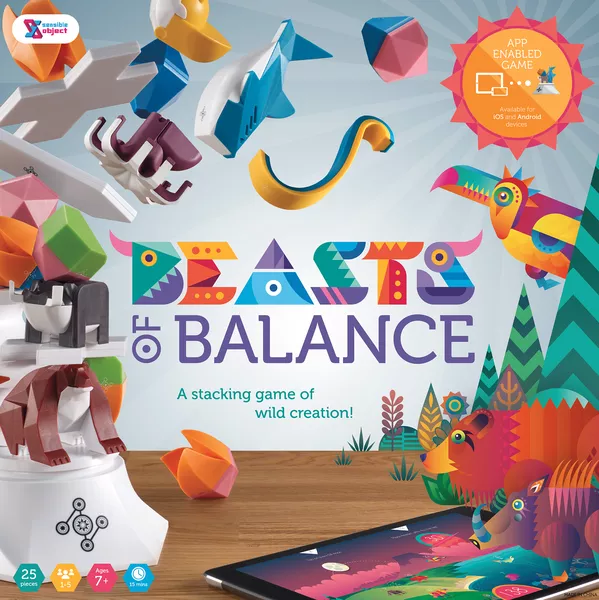
9. Beasts of Balance
Beasts of Balance is the tech-forward entry on this list. You stack beautifully sculpted animal and artifact pieces on a digital scale base, and each piece gets scanned by NFC when placed — triggering animations on a companion app showing your creatures evolving and earning you points.
The physical game is a stacking challenge. The app layer adds a score system, creature stats, and visual feedback that kids especially find mesmerizing. When your stacked rhino evolves into something with wings, people at the table react to the screen. It bridges digital and analog in a way that mostly works.
It’s best played cooperatively — everyone working together to build as high as possible before the stack falls. Competitive mode exists but feels less natural for the format.
The app dependency is the thing to flag. The game doesn’t work without it, and app-dependent games always carry the risk of abandonment. As of writing the app is still supported, but it’s worth knowing before you buy.
For families with kids in the 6–12 range who respond to digital feedback, this is a unique experience. For adults-only groups, Crokinole or Klask will probably land better.
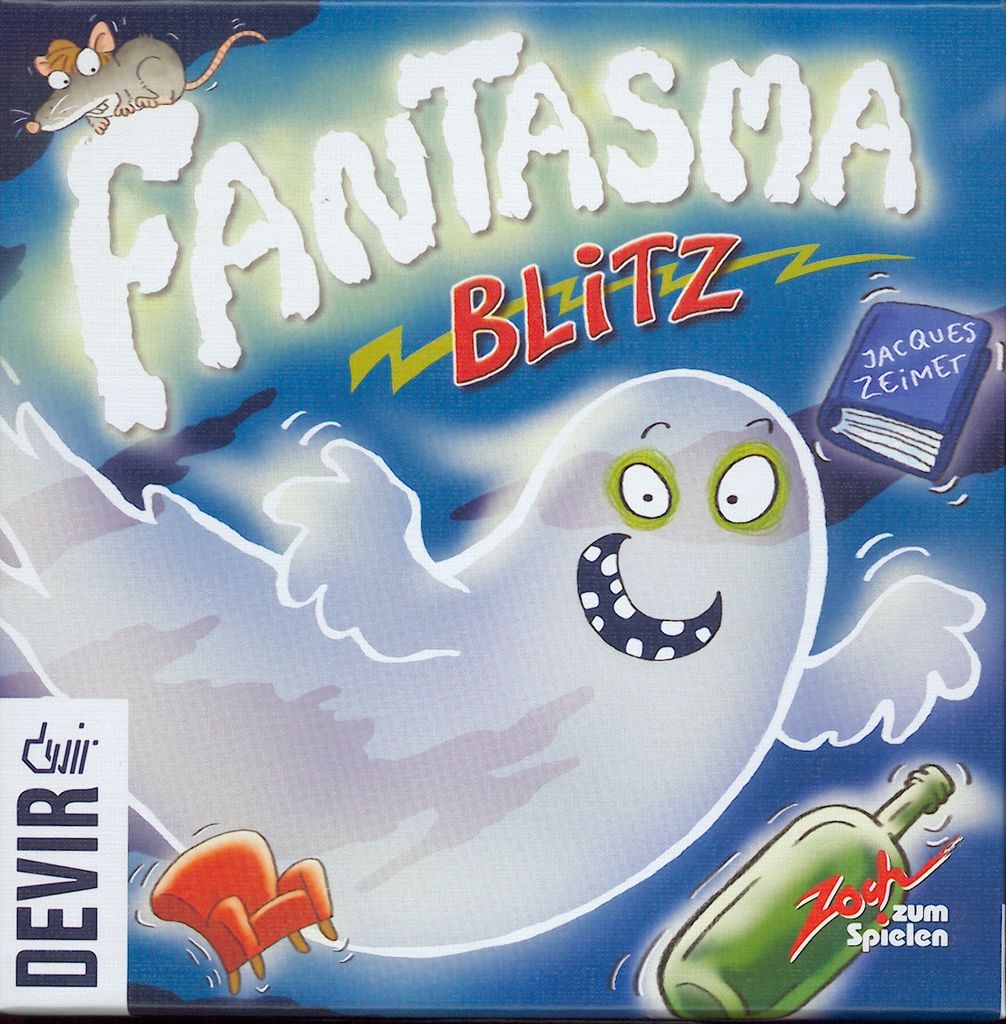
10. Ghost Blitz (Full Review Here)
Ghost Blitz sits at the lighter end of dexterity games — it’s more reaction speed than physical skill, but there’s enough “grab the right thing fast before someone else does” energy that it earns its place.
Five wooden objects sit in the middle of the table: a ghost, a chair, a book, a mouse, a bottle. On your turn you flip a card showing two items, each a specific color. If one of the objects on the card matches exactly (color and object), grab it. If nothing matches, you grab the item that is neither the color shown nor the object shown. Simple to explain, fast to misread.
The mismatch rule is where your brain starts lying to you. You see a grey ghost and a red chair, and your hand shoots toward the chair — but wait, the chair on the card is red, so the real chair is wrong, and the ghost is grey which means… someone else already has it. The cognitive load of “what doesn’t match” is the whole game.
It plays 2–8 and runs about 20 minutes. Great as a warmup, great for large groups who want something with no downtime. If you’ve played Codenames with a group that loves word-speed puzzles, Ghost Blitz scratches a similar itch in a shorter window.
At the price it sells for, it’s a very easy recommendation to add to any game shelf.
Conclusion
If you’re only buying one, start with Rhino Hero for mixed groups and families, or Klask if you want the best two-player dexterity game money can buy. Crokinole is the pinnacle of the category — if you can justify the price and have a group that’ll play it regularly, it’s worth it.
Dexterity games have a way of bringing people out of their shells who’d normally tune out between turns in a longer strategy game. Pick one that matches your player count and budget, put it on the table, and watch people lean in.
For more of our picks by occasion, check out our best party board games and best games for large groups.
Thumbnail image artificially generated for illustrative purposes.